
Cracked tooth repair depends on where a fracture runs, how much strong tooth remains, and whether the inner pulp or root is involved. For adults in Elk Grove, an examination with Dr. Ionescu can help distinguish a small chip from a fracture that needs a crown or cannot be stabilized.
Key Takeaways
- A fine line is not always a deep fracture. Craze lines are limited to enamel, while a split tooth has separated segments and a vertical root fracture extends into the root.
- Bonding can suit a small, stable break. Composite rebuilds a limited area without covering the entire tooth.
- A crown can support a weakened tooth. It may be appropriate when enough sound tooth remains and the crack can be stabilized.
- A root canal treats pulp, not the crack. If the tooth remains restorable, a crown may also be needed to protect it.
- Some fractures cannot be saved. A crack into the root, a split tooth, or too little healthy structure can make extraction the more durable choice.
- Protect the tooth while arranging care. Avoid chewing on it, and seek urgent attention for swelling, fever, or rapidly worsening pain.
Dr. Theodore Ionescu examines the tooth, the bite, and the gums together before recommending treatment, because a crack that looks small on the chewing surface can run toward the nerve. Appointments at the Elk Grove Boulevard office are scheduled at sixty minutes so the exam, the images, and the questions are not compressed into ten. When a crown is the answer, the practice can scan, design, mill, and bond a CEREC crown in one visit, and it keeps same-day openings for broken teeth that need to be seen now.
How the crack’s shape and position affect treatment
A craze line is a fine mark confined to the outer enamel, while a fractured cusp is a break affecting one of the tooth’s raised chewing points. A deeper crack may extend through the tooth toward the pulp, a split tooth has segments that have separated, and a vertical root fracture runs down into the root.
The deeper and more extensive the fracture, the harder it can be to stabilize with a lasting restoration. A line that is difficult to see, or pain that has eased, does not establish that the tooth is sound.
Pain when biting, discomfort as pressure is released, and sensitivity to hot or cold can point to a crack, but symptoms do not show how far it extends. Cracked tooth syndrome describes a pattern of symptoms associated with a cracked tooth, but examination is needed to identify the cause and guide treatment.
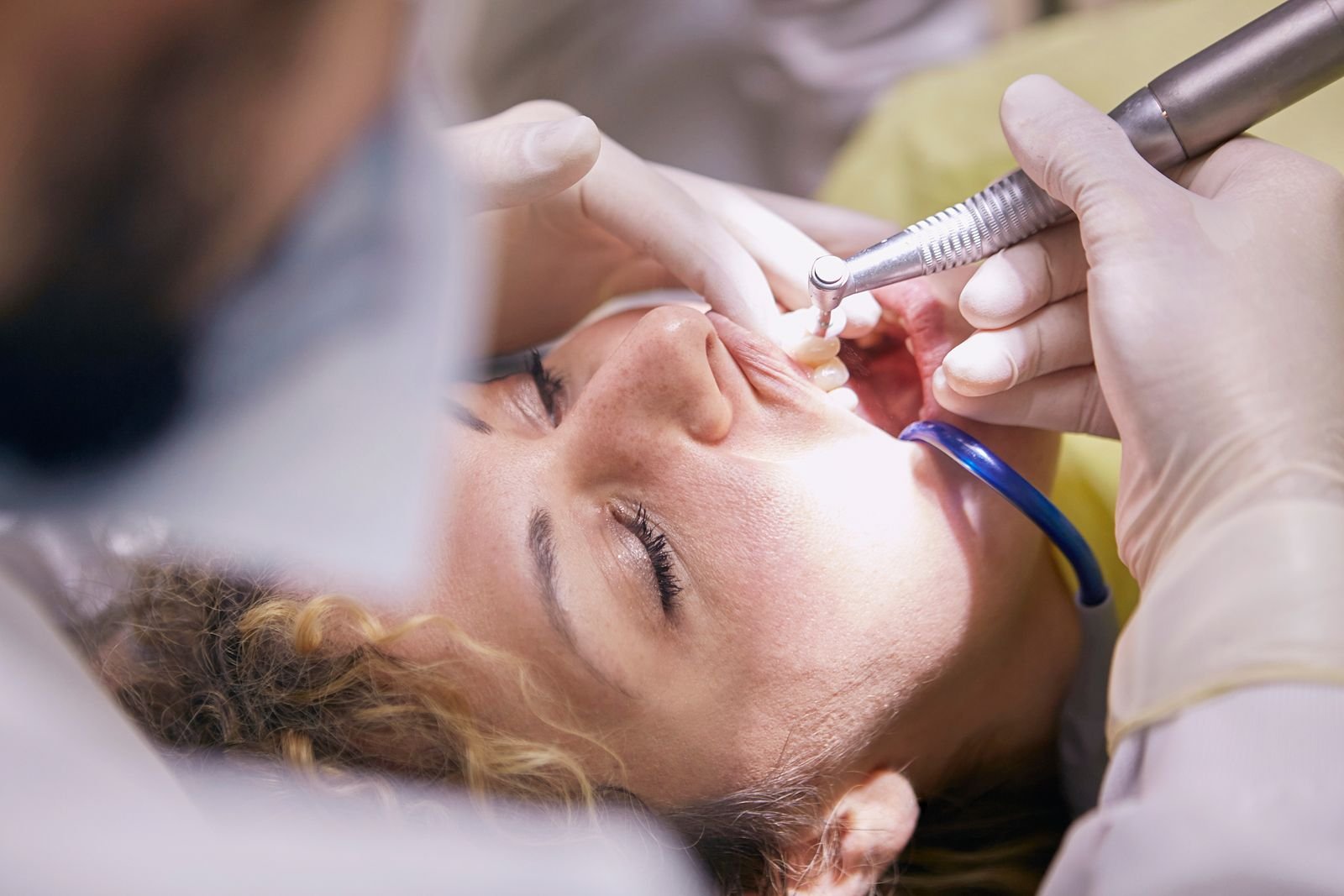
During an assessment, a dentist may inspect the tooth under magnification, test how it responds to biting, shine light through it using transillumination, probe around the gums, and take dental images. X-rays can help assess the tooth and surrounding structures, although a fine crack may not show clearly on an image.
Dr. Ionescu considers the crack’s location and depth, whether the dental pulp is involved, how much sound tooth remains, and whether the tooth is stable. The damaged-tooth treatment guide also outlines how these findings shape restorative decisions, and the restorative dentistry services page shows which repairs the office provides.
When composite bonding may be enough
Composite bonding may repair a small chip or limited break when the remaining tooth is stable. Tooth-colored material rebuilds the damaged area while preserving more natural tooth than a restoration that covers the whole tooth.
Composite bonding is a conservative option for a limited break with sound, stable tooth around it. The visible size of a chip alone does not determine whether bonding is suitable: a deeper crack or weakened chewing cusp may need broader support.
Bonding restores the damaged area, but it does not make an unstable or deeply cracked tooth equivalent to an intact one. The examination helps determine whether the remaining structure can handle normal chewing forces with a small repair.
Did you know? Endodontically treated teeth with definitive full-coverage restorations had a two-year success rate of 93.6 percent (Journal of Endodontics).
When a crown can brace a cracked tooth
A dental crown covers and reinforces a more extensively damaged tooth. It may be recommended when a crack or break weakens a cusp, or when too little tooth remains for a small bonded repair to provide enough support, provided the tooth is still restorable.
A dental crown can suit a fractured tooth when enough healthy structure remains to hold the restoration. The decision depends on whether the crack can be stabilized and whether the root and surrounding gum are firm enough to support treatment.
When clinically appropriate, the office can scan the tooth, design and mill a CEREC crown, then fit, adjust, and bond it during one visit. The practice advises planning for about two hours; a same-day crown is not suitable for every fracture.
More information about same-day crowns in Elk Grove explains the in-office process. A crown can brace remaining tooth structure, but it does not repair a root problem or make an unstable fracture predictable.
What changes when the pulp or root is involved
Lingering sensitivity to heat or cold, pain that starts without a clear trigger, or worsening discomfort can raise concern about inflamed or infected pulp, the soft tissue inside the tooth. These symptoms do not confirm pulp damage on their own, so the dentist combines the symptom history with examination findings.
Root canal treatment may remove inflamed or infected pulp when the tooth can still be restored. It does not close or stabilize a crack, so a crown may also be needed to cover and reinforce the remaining tooth.
If the crack extends into the root or the tooth has split into separate segments, a lasting restoration may not be able to hold it together. Dr. Ionescu assesses the fracture and the support around the tooth before recommending whether treatment can preserve it.
Did you know? A study of teeth suspected of being cracked on symptoms alone confirmed the diagnosis in only 5.6 percent of cases, which is why the exam matters more than the guess (Clinical and Experimental Dental Research).
When extraction may be the more durable choice
Tooth extraction may be considered when a severe fracture extends into the root or leaves too little sound structure to support a durable restoration. A visible crack alone does not determine the outcome, because its location, depth, pulp status, and the condition of the surrounding gum and root all matter.
An extraction and replacement discussion may be appropriate when the tooth cannot be reliably stabilized. If removal is recommended, options such as a dental implant, bridge, or denture can be considered in light of the person’s other teeth, bite, and restorative needs.
The restorative dentistry options include approaches for rebuilding or replacing teeth. Dr. Ionescu’s recommendation weighs the likely durability of saving the tooth against the needs and maintenance involved in replacement.
Protect the tooth while arranging care
Until the tooth is assessed, avoid chewing on that side and choose soft foods. Do not bite hard foods or objects with the tooth, use household glue, or file a sharp edge, since these actions can put more force on the fracture or injure nearby tissue.
If a piece breaks off, keep it clean and bring it to the appointment. Dental wax can cover a sharp edge temporarily, but a home repair kit or temporary covering does not stabilize the tooth like definitive dental treatment.
Contact the office promptly rather than waiting for severe pain. Swelling, fever, or rapidly worsening pain calls for urgent attention; the practice has emergency appointments and same-day openings for problems including a broken tooth.
When arranging an appointment, describe when pain occurs, whether a fragment is loose, and whether swelling or fever is present. The Elk Grove office contact page provides details for reaching the practice, and the full list of dental services shows everything handled in house.
At follow-up, the dentist can check comfort and bite function and assess whether the tooth remains stable. If a temporary material makes the bite feel high, contact the office rather than trying to adjust it at home.
Grinding, trauma, and biting hard objects can contribute to cracked teeth. Avoiding hard-object chewing and asking about a night guard when grinding is suspected can help reduce the chance of further damage.
Frequently Asked Questions
How long can a cracked tooth wait before it is treated?
There is no dependable number of days that is safe for every crack, because repeated chewing can extend some fractures before symptoms become severe. A dentist can advise on timing after assessing the tooth and the person’s symptoms.
How much does it typically cost to repair a cracked tooth?
The total depends on the treatment needed, which may involve bonding, a crown, root canal treatment, or removal and replacement. An estimate reflects the examination findings and the planned procedures, rather than the visible size of the break alone.
Can a dentist reattach a piece of a broken tooth?
Sometimes, if the fragment fits and the remaining tooth can support it.
What should someone do if a cracked tooth suddenly stops hurting?
Note when the pain stopped and whether the tooth still reacts to pressure or temperature, since that history can help the dentist assess what changed. A darker-looking tooth or a pimple-like bump on the gum near it is also important to report.
Can a cracked tooth be fixed?
Sometimes: a dentist can assess whether enough sound structure remains for a repair to hold.
What is the difference between a cracked tooth and a split tooth?
A cracked tooth has a fracture that may extend through the tooth without its parts fully separating. A split tooth has segments that have separated, making it much harder to stabilize and often impossible to save.
Conclusion
Cracked tooth repair ranges from composite bonding for a small stable break to a crown for a weakened but restorable tooth. When pulp involvement is present, root canal treatment may be part of care, while a crack into the root or a split tooth may leave extraction as the more reliable option.
For a suspected cracked tooth in Elk Grove, Dr. Ionescu can assess the fracture, remaining tooth structure, pulp, and surrounding support before recommending a path. Protect the tooth from chewing pressure and arrange an examination promptly, even if the crack is hard to see or the pain has eased.
If any of this matches what you are feeling, the next step is an exam rather than a search. Call Dentistry by Design at (916) 685-4662 or request an appointment. Our office will show you what the images show and tell you what it will take.