A lower denture that floats during speech starts a lot of exams in Dr. Ionescu’s chair. He checks how much bone ridge remains, where the sore spot sits, and how many years the same base has been worn. When Dr. Theodore Ionescu examines dentures that Elk Grove residents bring in, he starts with the tissue before looking at the bite. A denture is a prosthesis. It replaces teeth and gum but cannot stop the bone from changing underneath. Dr. Ionescu designs the prosthesis so it fits today and tells you plainly when implant support is the better answer.
Why patients choose us for dentures and partials
Fit is the whole job
Multiple try-ins and a technician fitting the denture to your tissue, not averages.
Lower denture honesty
If implants would change your life, the practice tells you before you pay twice.
Comfort adjustments
Sore spots are adjusted quickly, since a denture that goes unworn fails.
Repairs and relines
Same office, so a cracked plate is not a two-week crisis.
Full Dentures, Partials, and Implants
A full denture replaces an entire arch on a gum-colored base. A partial uses metal or flexible clasps to hold onto the teeth you still have. Both depend on the shape of your ridge, your bite, and the health of the tissues underneath. An implant-supported denture is different. It snaps or screws onto fixtures placed in the bone. Dr. Ionescu discusses implants when the ridge is too flat to hold a lower denture still, or when a patient cannot tolerate a full palate cover. The practice usually covers the surgical side on the dental implants page before taking a denture impression. dental implants page
Records and Try-In Visits That Decide Fit
The first appointment is about records, not promises. Dr. Ionescu takes impressions of both arches and measures the vertical space where the teeth belong. Sarah or Leticia seats you while the team records how you bite and speak. A week or two later, you return for a wax try-in. The teeth are set in wax, and the team adjusts the midline, the lip support, and the height of the bite before the lab processes the final base. If the try-in feels wrong, Dr. Ionescu stops there. Delivery usually happens one to two weeks after that. The team spends at least 60 minutes placing the denture, marking pressure spots, and adjusting the borders.
Patient smile restored with implant-supported teeth at Dentistry by Design
Why Lower Dentures Move
A lower denture sits on a narrow arch and gets pushed around by the tongue. It has no upper palate to create suction. If the bone ridge has shrunk, the base has less stable surface to rest on. Implant retention changes that problem. Two implants placed in the front of the lower jaw can hold a bar or attachments. The denture still comes out for cleaning, but it stops sliding during chewing. Dr. Ionescu does not recommend implants for everyone. If your ridge is still tall and stable, a conventional lower denture may serve you fine for years. When upper and lower arches are both failing, he may talk with you about full mouth reconstruction before committing to one denture. full mouth reconstruction
Eating and Speaking Adaptation, Honestly
Most patients need two to four weeks to learn a new lower denture. The muscles of your cheek and tongue have to hold the base without dislodging it. Start with soft foods cut small, and work up to firmer foods as control improves. Speech changes for the first week or two. Certain sounds like s and th may feel thicker. Reading aloud at home for five to ten minutes a day helps the tongue find its new position faster than any adjustment Dr. Ionescu can make in the chair.
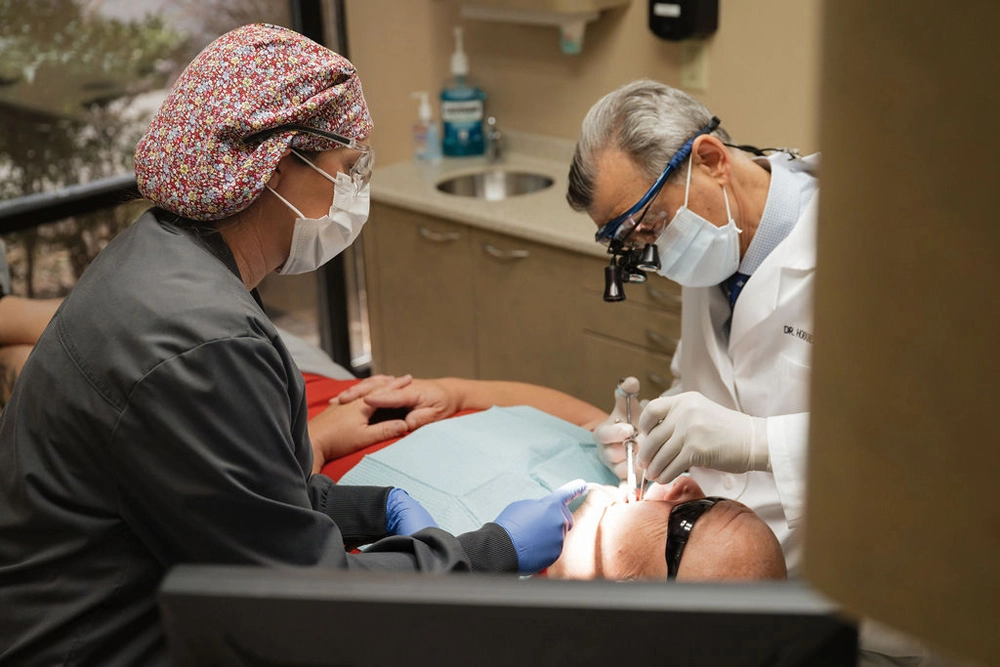
Dentistry by Design team treating a patient in Elk Grove
Relines, Repairs, and the Five to Seven Year Lifespan
A denture base ages even when the teeth still look fine. The acrylic absorbs moisture and can warp slightly over time. The bone underneath also changes, so a denture that fit at delivery will not fit the same five years later. Dr. Ionescu recommends an exam at least once a year to check tissue health. Relines add material to the base to match the new ridge shape. Repairs are common for cracked bases and broken teeth. Expect to consider replacement around five to seven years, even with good care. Some patients go longer, but he would rather replace a worn base than repair one that is too thin.
Cost, Insurance, and the Implant-Supported Option
Cost comes down to three things: type of denture, number of visits, and whether implants are involved. Conventional full dentures and partials are less expensive than implant-retained ones because they do not require surgery. The exact fee depends on your impressions, extractions, and any reline before delivery. Most dental insurance plans contribute toward dentures once per five years or so. The office verifies your benefits before you start. Erin handles the numbers and walks through what insurance will pay and what is left on your side. If you are paying out of pocket, the practice has an in-office dental savings membership and CareCredit financing. Dr. Theodore Ionescu wants you to know the full amount before he picks up a handpiece. Erin puts the specific payment options and membership details on the financial information page. financial information page
Hygiene and Tissue Health Checkups
The denture has to come out at night. Your tissue needs air and the base needs time in water or a denture cleaner. Dr. Ionescu tells patients to brush the denture daily with a separate brush, not toothpaste. At hygiene visits, the hygienists check the tongue, cheeks, and palate for pressure ulcers or fungal changes. The team also cleans the teeth that remain under a partial, because those anchor teeth carry extra load. Bring your denture with you to every checkup. Dr. Ionescu can spot a cracked base or a worn clasp before it fails during a meal. You can read the rest of that range on the services page. services page
How treatment works here
1. Consult and records
Impressions, bite records, photos, and a discussion of the fit you expect.
2. Try-in
Wax setup checked for speech, lip support, and appearance before processing.
3. Delivery
The team inserts, adjusts pressure points, and teaches insertion and hygiene that day.
4. Adjustment visits
Quick checks while your tissue adapts over the first weeks.
5. Long-term care
Relines as bone changes, plus annual tissue exams.
Dr. Theodore Ionescu, DDS, practices at Dentistry by Design in Elk Grove
Who you are seeing
Dentistry by Design operates on E Stockton Blvd in Elk Grove, where Dr. Theodore Ionescu has practiced for more than twenty years. He plans treatment himself, so the person who quotes the work is the person in the room when it happens. Before booking, patients can read about the office and team or check financing and insurance.
Related pages: Dental Implants, Full Mouth Reconstruction, Elk Grove CA
Questions patients ask before they call
How long will it take to get your dentures? Plan on three to five visits over about three to six weeks. The practice takes records, brings you back for a wax try-in, and delivers the final denture. After delivery, Dr. Ionescu wants at least one follow-up visit to adjust pressure spots. If extractions or implants are part of the plan, the timeline extends.
Why does your lower denture move when you talk? A lower denture sits on a narrow bone ridge and is constantly pushed by the tongue. It lacks the suction an upper denture gets from the palate. As the ridge shrinks over time, the base has less stable surface to sit on. Two implants can hold a lower denture much more securely.
Do you need denture adhesive? Not if the fit is correct. Dr. Ionescu prefers that a denture stays in by suction, border seal, and muscle control. Adhesive can mask a loose fit and delay a needed reline. For special events, a small amount is fine, but daily adhesive usually means the base needs adjustment.
What is the difference between a full denture and a partial? A full denture replaces an entire arch of missing teeth. A partial denture replaces some missing teeth and clasps onto your remaining natural teeth. Dr. Ionescu chooses the design after looking at the health of the teeth that will anchor the partial.
How often should dentures be replaced? Most denture bases last five to seven years before the fit or wear becomes a problem. The teeth may still look fine while the base warps or the ridge shrinks. Dr. Ionescu checks thickness and fit at your annual exam, and you decide together when a replacement is more honest than another reline.
Will your dental insurance cover dentures? Most plans include some denture benefit, often once every five years. The amount depends on your policy and remaining annual maximum. Erin verifies your coverage before treatment and gives you a clear figure. If you do not have insurance, the practice’s savings membership and CareCredit can help.
Bring the Denture You Are Tolerating
Call Dentistry by Design at (916) 685-4662 to schedule a denture exam with Dr. Theodore Ionescu. The practice is at 9381 E Stockton Blvd, Suite 100, Elk Grove, Monday through Friday from 7:30am to 4:30pm.